
Expanding Habitats with Native Plant Seed Collection: A How-To Guide
Collecting native plant seed is one of the simplest ways to expand habitat, increase plant diversity, and work with what’s already thriving in your landscape. It doesn’t require a lot of equipment or experience—just a little attention to timing and care.
If you already have native plants growing well on your property, seed collection is a natural next step.
Why Should I Collect Native Seeds?
When you collect seed from plants that are already thriving on your property, you’re working with genetics that are well suited to your soil, climate, and growing conditions.
Seed collection can also reduce reliance on commercial sources, which can be costly and aren’t always locally adapted. Over time, saving and sharing seed helps build more resilient landscapes—both on your own property and across your community.
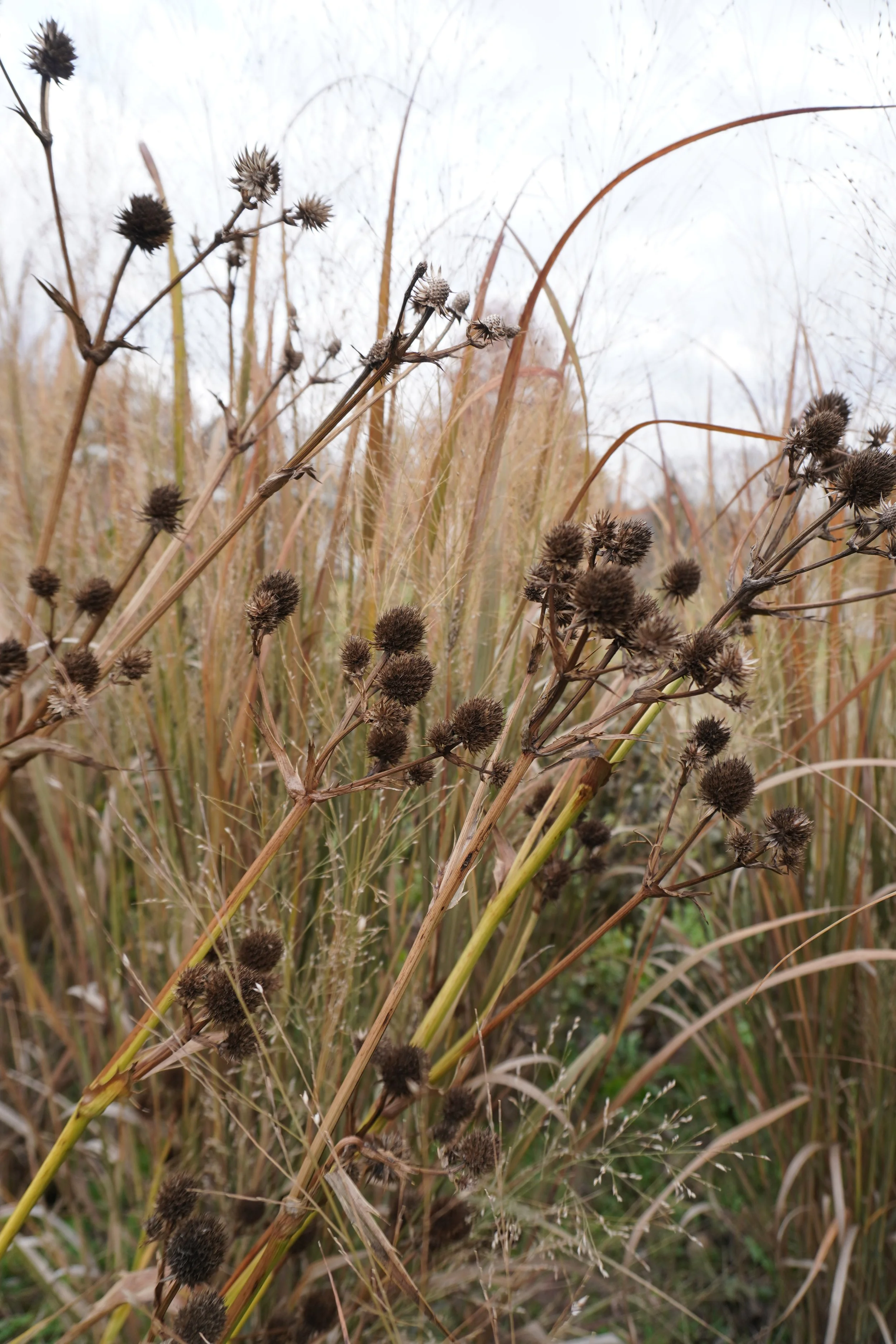
Step 1: Getting Prepared
What you’ll need:
Scissors or pruning shears, gloves, paper bags or envelopes, a drop cloth, and small containers like deli cups or tupperware. For lightweight seeds that disperse easily (like milkweed), gauze bags can be helpful.
Timing matters:
Most wildflower seed is ready two to five weeks after flowering. Ripe seeds are usually firm, dry, and darker in color. If a seed head rattles when gently shaken, that’s often a good sign it’s ready.
Warm, dry conditions speed up ripening, while cool or wet weather can slow things down.
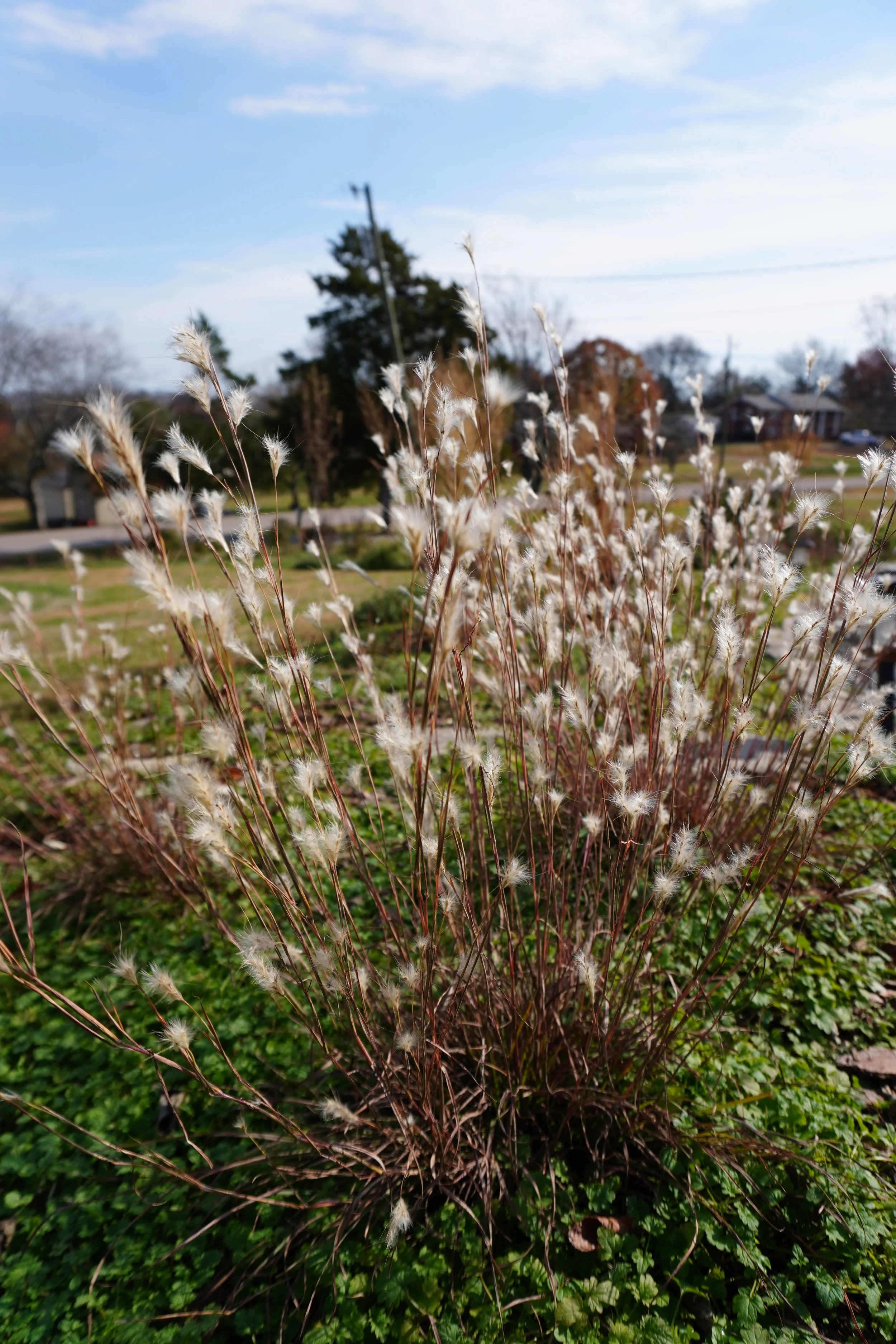
Step 2: Responsible Collection Practices
Seed collection should always be done with the long-term health of the plant population in mind.
A few general guidelines we recommend:
Collect only ripe seed. Green or soft seeds rarely germinate well.
Limit collection to about 10–20%. This allows plants to reseed naturally and leaves plenty of food for wildlife.
Minimize disturbance. Avoid trampling plants or compacting soil.
Avoid rare species unless you’re working on a permitted restoration project.
The goal is to expand habitat—not deplete it.
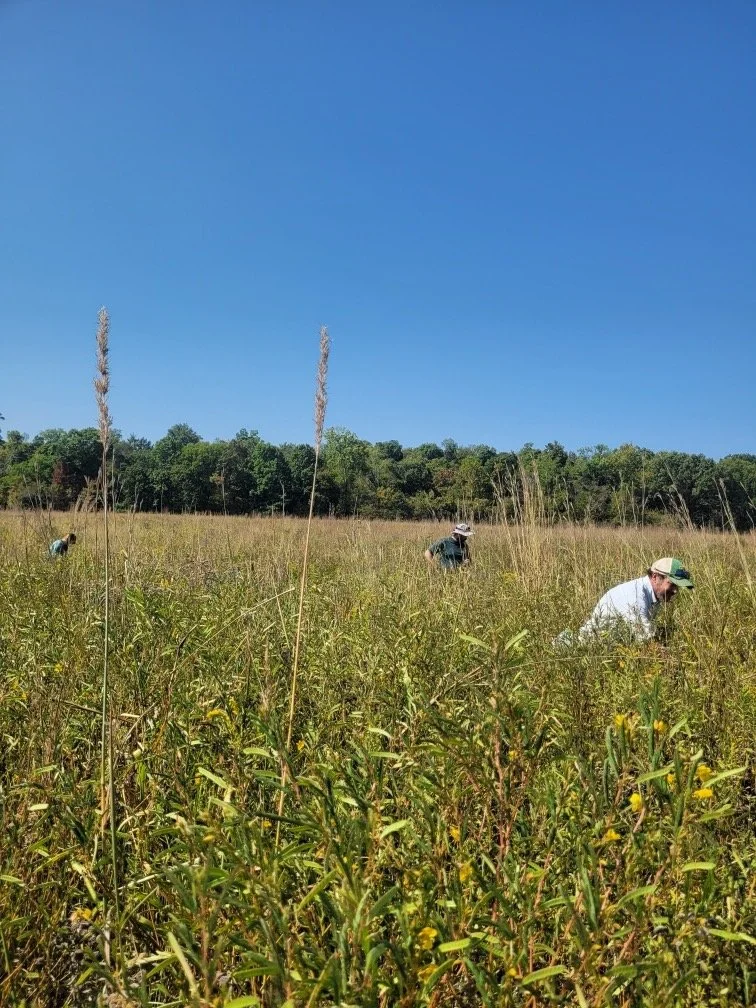
Step 3: Harvesting Techniques
For most home gardens and small projects, hand collection is the easiest and least disruptive method. Wearing gloves and using small bags tied around your waist keeps both hands free. Tough seed heads can be clipped with scissors or shears.
For larger-scale projects, mechanical tools like seed strippers or forage harvesters can save time, but they require care. Machines can easily collect unwanted species or disturb soil if not used thoughtfully.
Step 4: Seed Cleaning and Drying
After collection, seeds should be dried to prevent mold. Spread them out in a well-ventilated area, out of direct sunlight, and allow them to dry fully.
Once dry, remove excess plant material (called chaff). This can be done by hand, with screens, or by winnowing—pouring seed in front of a fan so lighter chaff blows away while heavier seed falls.
For small batches, simple hand-cleaning is usually more than sufficient.
Step 5: Seed Storage and Preservation
Store seeds in a cool, dry place and label everything clearly with the species name and collection date. Paper envelopes, jars, or breathable bags all work well.
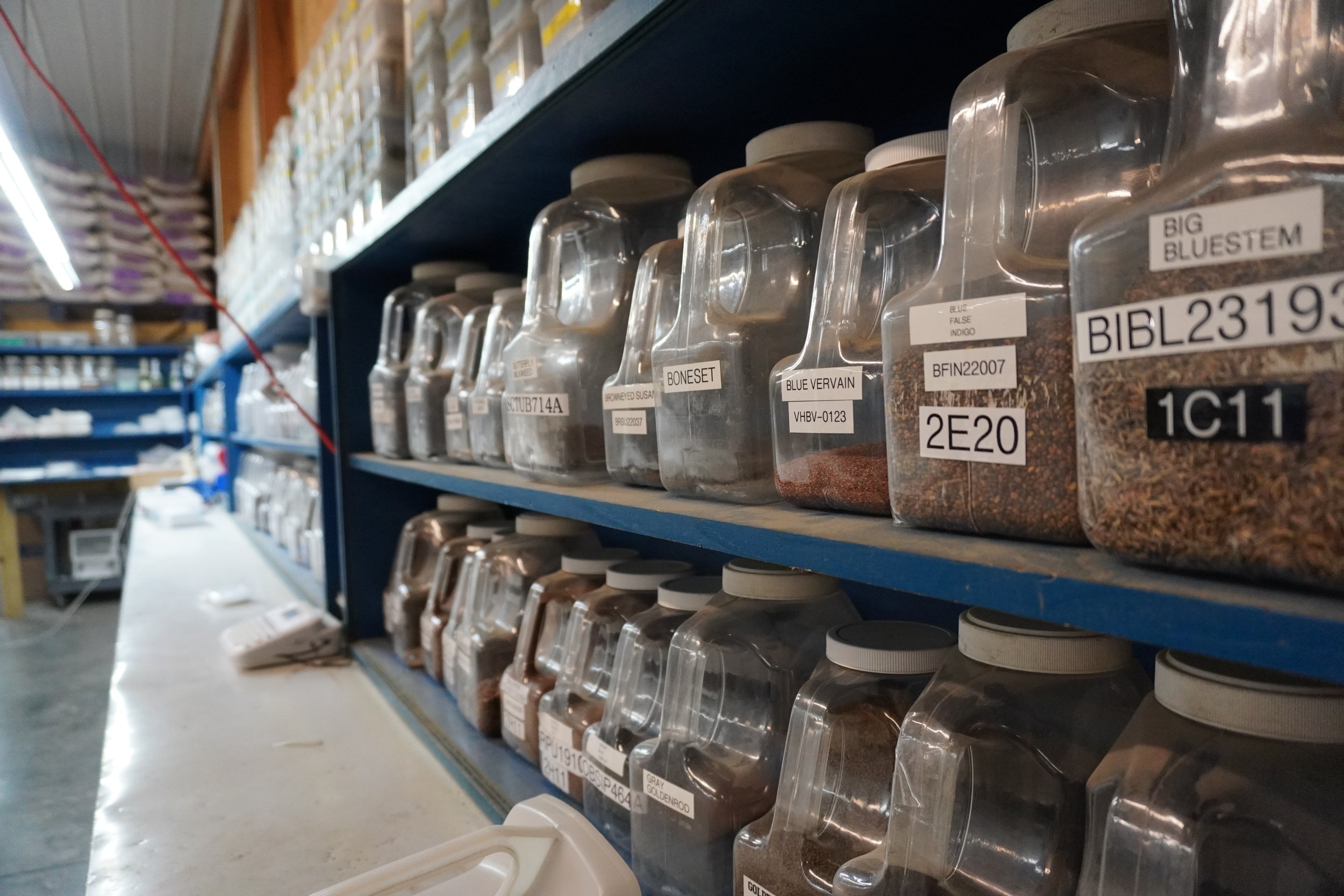
A helpful rule of thumb:
The combined total of storage temperature (°F) and relative humidity (%) should stay under 100.
Most native wildflower seeds are best planted within a year.

A note on fleshy fruits:
Seeds from plants like pawpaw (Asimina triloba) should not dry out. These seeds should be planted right away or stored moist in a one-to-one mix of damp sand, vermiculite, or perlite to maintain viability.
Step 6: Plant and Share
When you’re ready, seeds can be scattered into prepared areas. For small spaces, planting uncleaned seed is usually fine. Larger areas are easier to manage with cleaned seed.
Sharing seeds with neighbors or participating in seed swaps is a great way to extend habitat beyond your own property and build community around native plant stewardship.
Sowing Seeds for the Future
Collecting native plant seed is a simple, meaningful way to support pollinators and strengthen local ecosystems.
If you’re already growing native plants, seed collection is one more way to let those plants do what they do best.
Happy planting!

